The United States celebrated its one hundredth birthday, known as a centennial, in 1876. The celebration demonstrated how much the nation had changed since 1776. The year 1876 was a time of celebration, but also a time when the nation reflected on its torn past. Only 11 years had gone by since the end of the Civil War, when the states fought against each other. Ulysses S. Grant, who as a general had accepted the surrender of Robert E. Lee’s Confederate army in 1865, now served as President of the reunited North and South. Southern states were just emerging from the reconciliation process that historians call, ‘Reconstruction,’ and national unity was still in question (Noe, 179). More recently, the economic depression of 1873 affected Americans of all classes (Nash 265-266). At one hundred years old, the country had endured plenty of hardship, but it had endured!
Ten million Americans celebrated 100 years of nationhood at the Centennial Exhibition, held in Philadelphia’s Fairmount Park from May 10 to November 10 (Harrell, et. al. 587; McCabe 277 & 863), where they looked forward to an exciting future. New technology promised to launch industry out of the downturn, and at least for White Americans, the divisions of the 1860s could be left to the past (Mires 122), although there was debate among White southerners about the extent to which they should participate (Noe 173-174). Happy to accommodate the defeated South and avoid the recent war, the Centennial Exhibition emphasized more nationally unifying episodes from the American Revolution (Verplank, 422), and heroes such as George Washington, whose name and face decorated countless souvenirs (Mires 122 & 135, Nash 265 & 277).
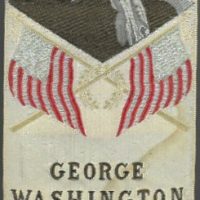
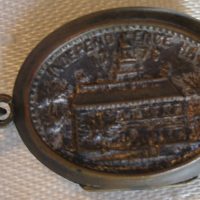
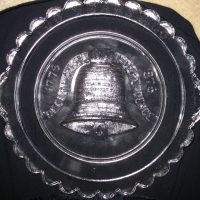
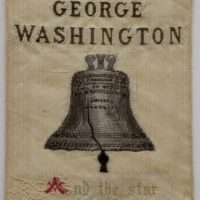
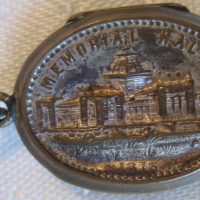
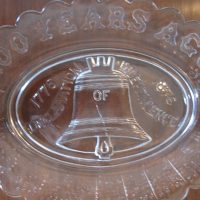
Click thumbnail images for a full view of each object.
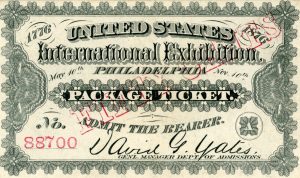
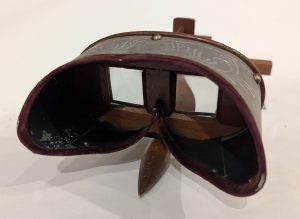
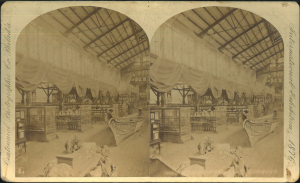
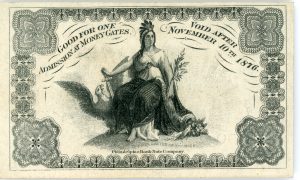
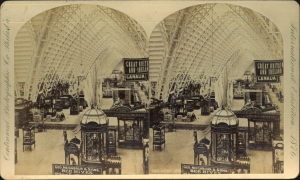
The Exhibition was huge–visitors entered one of 106 gates to explore 236 acres (Nash, 263). They walked through buildings and displays dedicated to industry, agriculture, foreign nations, individual states, and US government offices (McCabe, 10-16). In 1876, just like any event today, most people around the world and even within the United States did not attend in person. Most Americans only read about the exposition and experienced it through photographs and etchings published in newspapers and books. By 1877, both James Dabney McCabe’s Illustrated History of the Centennial Exhibition and Edward C. Bruce’s The Century: Its Fruits and Its Festival published detailed descriptions and images, describing the exhibits throughout each building. Stereoscopic images–where two photographs taken from slightly different perspectives recreate the 3D-effect of viewing a real object–were also available. Today, you can experience the Centennial Exhibition just as most people did in the 1870s, through the same publications and photographs. Grab your ticket and a map, and let’s visit!
The Exhibition opened on May 10th, with a ceremony held in the Main Building and in Machinery Hall. In addition to a procession and a speech by President Grant, the ceremony included a hymn written by John G. Whittier with music composed by John K. Paine, performed with an “orchestra of one hundred and fifty pieces and […] chorus of one thousand voices” (McCabe, 277-278, 293-294). Listen to a piano rendition of the tune below.
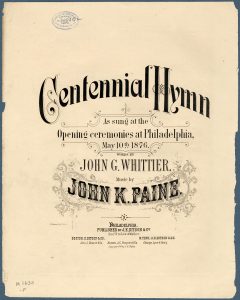
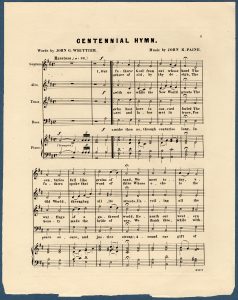
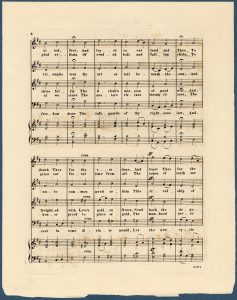
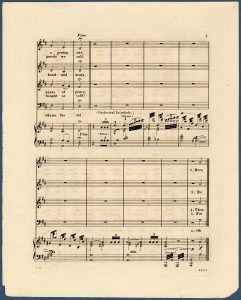
“Our fathers’ God! from out whose hand / The centuries fall like grains of sand, / We meet to-day, united, free, / And loyal to our land and thee, / To thank thee for the era done, / And trust thee for the opening one.”
-John G. Whittier, Centennial Hymn
Images: Library of Congress, Music Division. Audio: recording by Kelly Leitzel, Greencastle, PA.
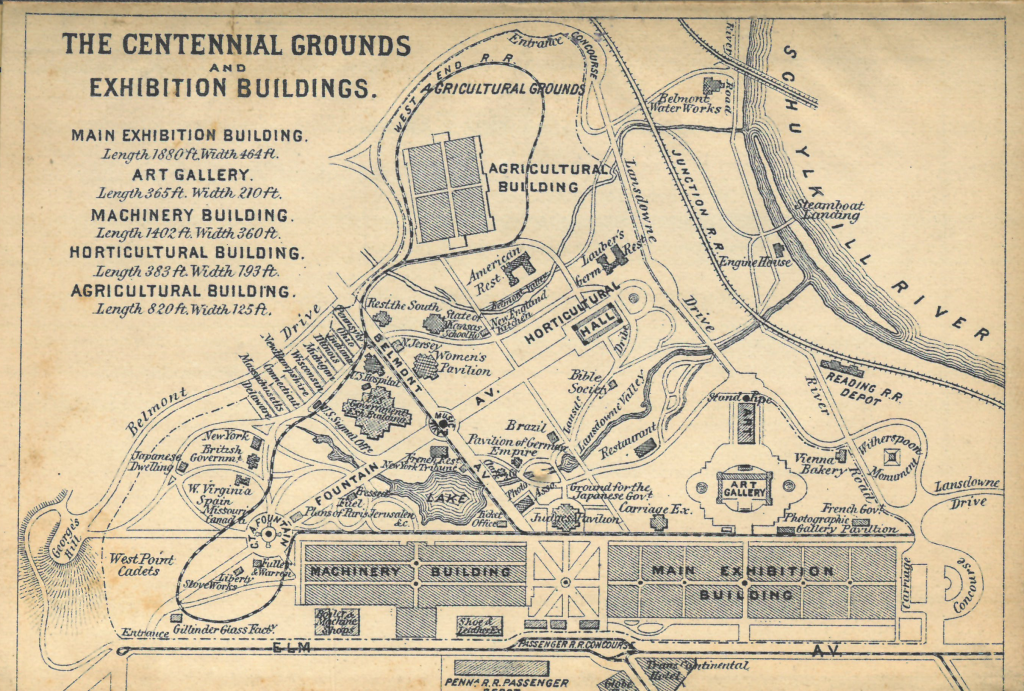
Next, take a look around the displays through the stereoscopic images. You can reference the location of each building on the map of Fairmount Park at the top of this section.
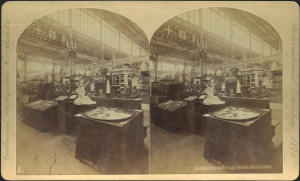
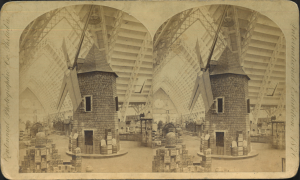
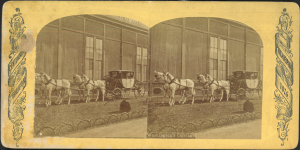
Let’s visit some of the individual buildings in Fairmount Park…
Main Building
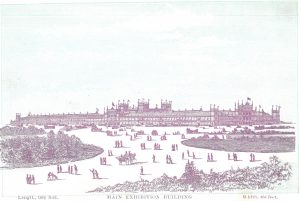
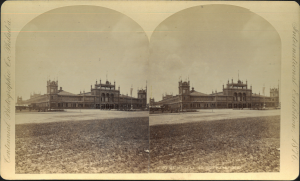
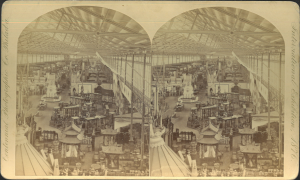
The largest building at the 1876 Centennial celebration, as its name implies, was the Main Building. See its size compared to the other buildings on the map above. The 1880-foot long building received visitors by trolley and carriage in addition to foot traffic (Hamlin & Lawrence 2). Edward C. Bruce, in his guidebook The Century: Its Fruits and its Festival, wrote that “it strikes the eye, at an angle of vision proper than either of the English or French structures” (Bruce 65-66).
The building’s interior opulence equaled its exterior size. Inside, McCabe described scented fountains, stained glass windows, lighting and gas systems (and fire suppression), paintings and figures celebrating global themes (emphasizing, of course, the United States), and large organs piping music in the hall as visitors explored displays of manufactured goods, mined products, scientific advancements and educational themes (337-349). He wrote that, “you heard the sharp click of the telegraph telling of the restless, busy energy that produced all this luxury, and were reminded by it that you were not yet in Fairyland” (McCabe 345). Imagine what it all must have been like for the average 19th-century visitor!
Machinery Hall
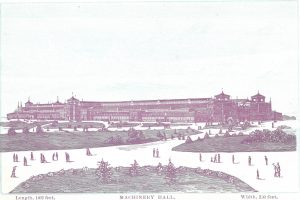
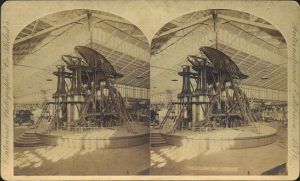
After the Main Building, the next largest building was Machinery Hall, emphasizing the importance of industry at the Centennial celebration (McCabe 470). One historian writes that the event displayed the United States as “…a progressive major economic and industrial power” (Bullock, 348). Nearly every writer to address the Centennial mentions a large steam engine constructed by George H. Corliss at the center of the Hall (e.g. McCabe 475-476). The engine vividly demonstrated the United States’ growing industrial power as it powered the other equipment and machinery in the building (Nash 263-264; Giberti 134; Mires 122). Industry, technology, and growth were repeated themes in both contemporary writings about the Exhibition, and in later historians’ analysis of the event.
Women’s Pavilion
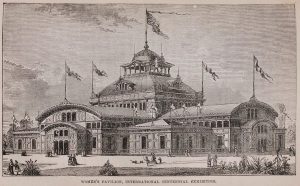
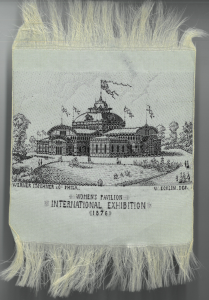
Women played a key role promoting the exhibition fair. A Women’s Committee under the leadership of Elizabeth Duane Gillespie sold shares of stock in order to raise money for the Exhibition, which was a mixed private and federally funded event (Harrell 588, Nash 271-273). It was the Women’s Committee that pushed the main committee invite foreign nations to participate, an idea that was so successful, that the extra space required pushed the women out of the Main Hall and into their own, separate building (Nash 271-273). Women’s participation reflected expanding but still cautious social changes. Women were afforded their own space, but even so, the Women’s Pavilion largely presented domestic achievements, and even the Women’s Committee did not embrace the new Suffrage movement (Verplank 423, Nash 274, Mires 133).
State Buildings
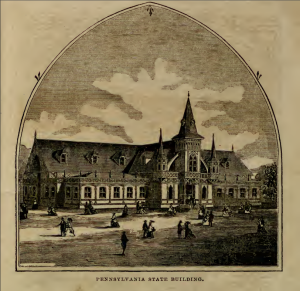
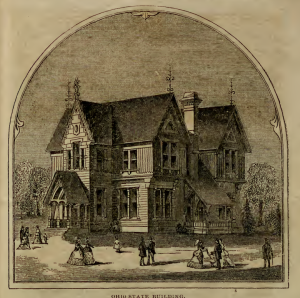
Many states took the opportunity to erect their own buildings and displays. As you can see in the map of the grounds, most state buildings were located between Belmont Drive and the US Government building. In addition to Pennsylvania and Ohio illustrated above, there were buildings for Connecticut, Delaware, Massachusetts, Michigan, New Hampshire, New Jersey, Illinois, Indiana, Kansas, and Wisconsin (Bruce 79).
“The Pennsylvania State Building stood north of Machinery Hall, and near the lake. It was a handsome Gothic cottage, ninety-seven feet long and fifty-seven feet wide, and was painted a light-brown. Over the main entrance rose a large tower flanked by two smaller ones” (McCabe, 665). The Pennsylvania Building showed the state’s contributions to the nation, and also included another Educational Hall building, including among other things material dedicated to the state’s normal school system for educating teachers (McCabe 665-667). Shippensburg University, then called Cumberland Valley State Normal School, was 5 years old during the Centennial, so the infant university was likely part of the display!
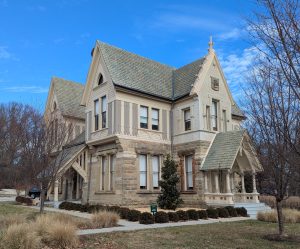
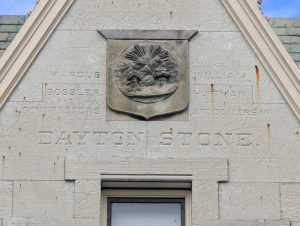
Ohio provided a house built entirely with material, “furnished by citizens of the State of Ohio engaged in the manufacture of the respective articles, and were intended as special exhibits” (McCabe 671). Twenty-one Ohio quarries contributed (Hamlin & Lawrence, 11). Edward C. Bruce described it as “[exhibiting] some of the finest varieties of stone furnished by the quarries of the State, together with some crumbling red sandstone which ought, in our opinion, to have been left at home” (Bruce 79). This building’s importance lay in its construction as much as its contents, displaying Ohio industry in its own construction. The sturdy stone building still stands in Fairmount Park:
United States Government Building
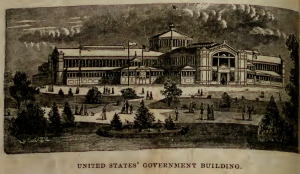
Several departments created displays for the large US Government Building, including the War Department, the Treasury, and the Department of the Interior (McCabe 611-653, Hamlin & Lawrence 12, Bruce 78). Hamlin & Lawrence amusingly wrote in their Centennial Exposition Guide, “the Treasury will show us how money is made, and the Engineers’ and Quartermasters’ Departments how to spend it” (12). Each department tried to impress visitors with its value, either through its history (e.g. the War Department), or its present activities (McCabe 611-653, Hamlin & Lawrence 12). An important factor for this building was to show the progress the United States government had made in 100 years.
For example, “The War Department [exhibited] a complete historical display of the progress made in the manufacture of arms, ammunition, and accoutrements from the earliest days of the Republic until the present time [along with] represented figures clad in uniform illustrating the most prominent periods in the history of the army of the United States…” (Hamlin & Lawrence, 12).
A Centennial Post-Office operated from the US Government Building and served the Exhibition throughout its duration (McCabe 347).
The Centennial celebration was an international event that strove to represent many nations. The event was a huge success. It introduced new technology and immersed the American public in culture. Prior to 1876, the United States witnessed many events including the Civil War, the Battle of Little Big Horn, the passing of the 13,14,15 Amendments, women’s suffrage movement, Colfax Massacre, and many immigration acts. Understanding the celebration in relationship to these event provides context to how people were celebrated. Little representation of African Americans, Native Americans and Asian Americans were included in the exhibit hall. The information that was include was not representative of the people. Many pamphlets and descriptions included derogatory and discriminatory language about women, African, Asian, and Native Americans.
Black representation at the Centennial mostly took the form of staff at restaurants and maintenance members on the Centennial grounds. However, a few notable examples of representation are important to mention. First, Frederick Douglass was invited to attend but not to speak by President Grant. He was barred upon entrance because the police did not believe President Grant had invited him. Other representation was showcased, including a monument created by Francesco Pezzicar and a painting by black artist Edward M. Bannister. Pezzicar created the monument titled The Freed Slave in Italy (Puckett). The monument was on display in Memorial Hall, and it was a controversial representation. The Italian artist tried to render a monument based on his understand of the ending of slavery in America (Powell). Bannister was awarded gold for his painting “Under the Oaks.” The judges were upset that a Black man won, since they did not know the artist during the judging competition. Another important example was the Allen statute. Around the Centennial grounds were monuments of famous people such as Columbus and Moses. The AME church also decided to create a statue of founder Bishop Richard Allen who resided in Philadelphia. A large gathering was to be held for the dedication, but the celebration was purposely delayed. The statue was eventually affixed 8 days before the end of the Centennial. Once the Centennial ended, the statue was removed although other monuments were allowed to stay (Puckett, Nash 268-270).
Unlike African Americans, an exhibit was dedicated to Native Americans. The “Indian exhibit” was in the United States Government Building. The exhibit’s theme was “to reconstruct the past history of the different races of man” (Trennert). The exhibit was created to show the “progress” of Native Americans having them contribute new artifacts to the museum to contrast with older artifacts. The exhibits include many artifacts which were displayed without knowledge of their use. Models showcased warrior clothing and weapons. One model showcased Tall Bull’s warrior dress taken from his dead body after battle in 1869. The display further ingrained stereotypes of Native Americans (Puckett).
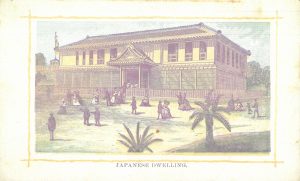
Asian Americans were also not represented at the Centennial exhibition. The event was international in nature so many foreign nations had exhibits. The Chinese and Japanese building represented America’s relationships with those nations. They did not represent the immigrants from the country who called America their home (Pitman).
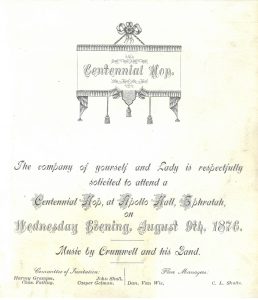
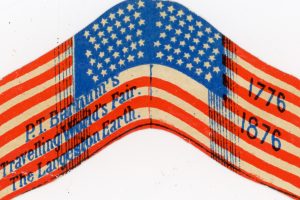
The Centennial was celebrated in many ways by people across the country. The main exhibit was in Philadelphia, but not everyone could attend. Fraternities, social groups, business, towns, and religious associations also held local celebrations. The following excerpts from newspapers provide examples of local celebrations near the Shippensburg Fashion Archives that happened throughout the centennial year.
The Centennial Exposition exhibited the United States’ industry and progress. Buildings and displays showcased America’s new technology, and foreshadowed the economic growth that would follow in coming decades. The nation continued to recover from the conflicts of the Civil War and found common ground in a shared history. The jubilation was less complete for indigenous, Black, and other minority groups, who were represented at the Exhibition as less than full stakeholders in society. Women made progress towards equality, even while the right to vote was still decades away. Still, Americans had a lot to celebrate in 1876, and the Centennial Exhibition exhibited America’s patriotism, progress, and industry.
Activity 2_ Experiencing the Centennial
Activity 3_ Local Celebration Analysis Activity
Activity 5_ Machinery Hall & Industrial Change
Presented by Shippensburg University graduate students Andrew Chesnut, Patrick Hartinger, and Sierra Harvey
Applied History M.A. Program – HIST 541 Museum Education – Fall 2024