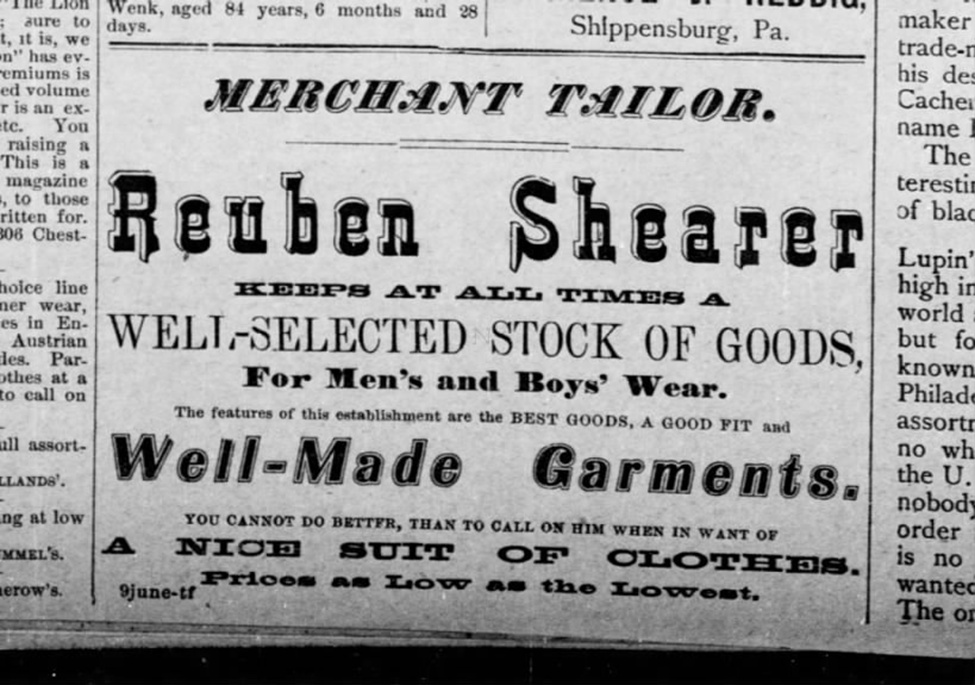
In 1889, Abraham Lincoln “Linc” Shearer had only been back in his hometown of Shippensburg for one year. During his time away, he was busy following in the footsteps of his father, Reuben Shearer, and older brother, Jacob, with an apprenticeship at a tailor’s shop in Philadelphia. Linc grew up in his father’s tailor shop in Shippensburg, and, like them, made a career out of this line of work.
But on January 18th, 1889, Linc experienced a life event unrelated to his training in Philadelphia. He married the woman who stayed by his side for the rest of his life. The Harrisburg Telegraph documented the event the next day, with little pomp or circumstance. On January 19th, 1889, it records: “Mr. A. Lincoln Shearer, of Shippensburg, a brother of Ex-County Superintendent Shearer, was married yesterday to Miss Annie M. Fogelsonger. The ceremony was performed at the bride’s home in Shippensburg by her father, the Rev. D. M. Fogelsonger. The ushers were Messrs. William Black and Chris Fogelsonger, of Shippensburg, while Miss Minnie Oberholtzer, of Mt. Joy, Lancaster County, and Miss Rhetta Wilber, of West Fairview, were bridesmaids.”
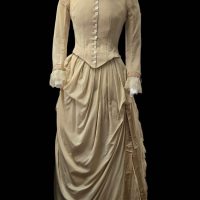
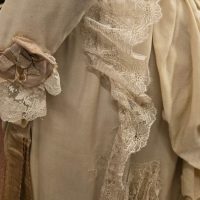
The image that has been painted of the modern western wedding is characterized by the popularity of a white wedding dress which is usually referred to as being made popular by Queen Victoria, although there is evidence that the white wedding dress was popular before her. The quintessential white wedding dress stretches back well into the eighteenth century. Anne’s dress, made for her winter wedding, is a cream wool two piece, with a bustled skirt and fitted bodice that are embellished with ribbon and fine lace.
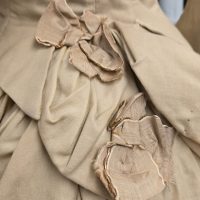
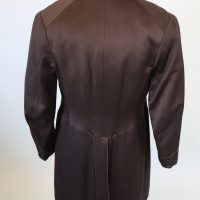
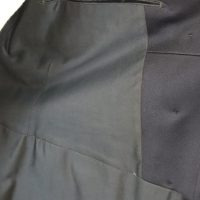
This dress is both a piece of Shippensburg history for the Shearer family and rooted in the context of historical wedding attire. Annie encapsulated the expectations of the time by wearing white and the dress’s survival through the last 136 years remains a souvenir of her wedding day. She must have been a beautiful bride, but her role only makes up half of the picture. The key pieces of Linc Shearer’s wedding suit from January 18th, 1889, remain to paint the image of the happy couple. These remaining pieces are his black wool broadcloth vest and frock coat. Linc probably wore out (or outgrew) his wedding trousers. The surviving articles are well made and stylish for the time. The buttons are embroidered with a checked pattern, there are piping details on the lapels and sleeves, and the cut of both the vest and coat align with the current fashion. The wool broadcloth that the suit is made of is heavy and still in good condition, as is the silk lining of the frock and vest.
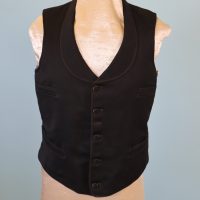
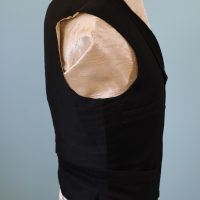
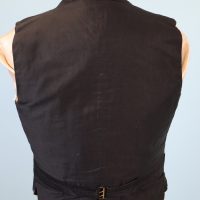
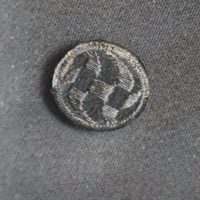
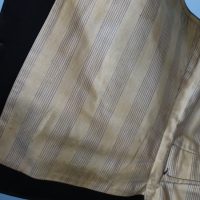
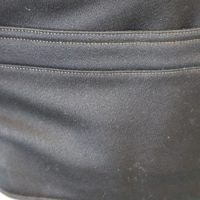
Notable details of the vest include triple machine stitching on its double breast and waist pockets as well as a black cotton twill belt with a buckle. His frock coat is long, with slash lapels, checked buttons, and long tail in the front and back with a tail vent. Linc likely made his fashionable suit himself at his brother’s shop and finished it with the assistance of his older brother to ensure that the fit was perfect.
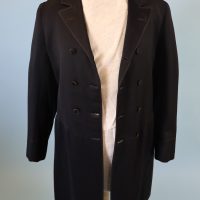
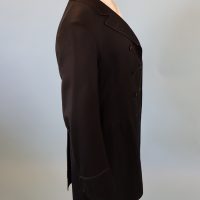
When continuing the story of the Shearer and Fogelsanger families, Linc Shearer’s talents as a tailor came in handy. On December 1, 1914, Annie and Linc’s nephew, David Fogelsanger, married Lydia Hawbaker, and he needed a suit for the occasion. Linc made David’s wedding suit just as he likely made many wedding suits over the years. The suit is a black wool day suit with matching vest, bow tie, and pants, all made with just as much care and attention to detail as Linc gave to his own wedding suit. Even in little Shippensburg, Linc was able to keep up with the changing styles of the day. David’s suit is very different from his uncle’s.
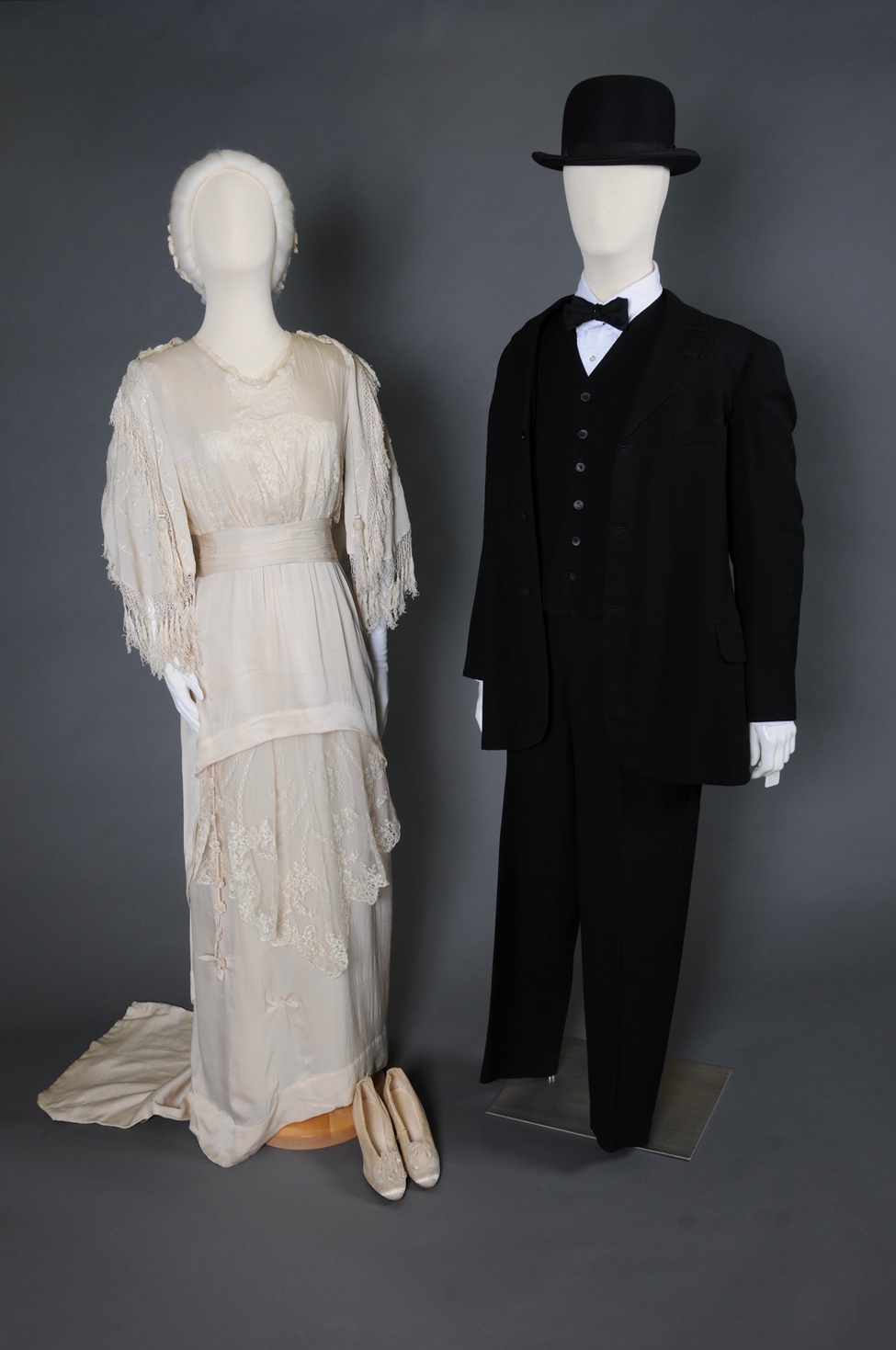
The popular styles for the cut of the coat changed drastically since 1889, with a much squarer body having come into the limelight. However, the quality of Linc’s craftsmanship was the same. Linc’s capable hands made his nephew a suit that not only served him well to marry his wife Lydia but also inhabits a rare corner of history. Most tailors did not sign their suits and Linc must have been of the same mindset. Neither Linc’s wedding suit nor his nephews bare any mark or signature to denote them as a Shearer piece. Without the invaluable provenance information, history would have forgotten the maker. This connection between maker and product is made all the rarer as pieces made for an uncle and a nephew on their wedding days 25 years apart.
Bibliography
“Abraham Lincoln Shearer Returns to Shippensburg.” Newspapers.com, June 1, 1888. https://www.newspapers.com/article/the-news-chronicle-abraham-lincoln-shear/180464585/
“Abraham L. Shearer in the 1880 Federal Census.” Ancestry. https://www.ancestry.com/search/collections/6742/records/50099545?tid=205954483&pid=372706358791&ssrc=pt.
“Advertisement for Shearer’s in Shippensburg, PA.” Newspapers.com, November 7, 1884. https://www.newspapers.com/article/the-chronicle-advertisement-for-shearer/180065056/
“Lincoln Shearer and Annie Fogelsanger Marry.” Newspapers.com, January 19, 1889. https://www.newspapers.com/article/harrisburg-telegraph-lincoln-shearer-and/180356902/
“Lincoln Shearer Studies Tailoring in Philadelphia.” Newspapers.com, September 4, 1885. https://www.newspapers.com/article/the-chronicle-lincoln-shearer-studies-ta/180355985/
“Lydia Hawbaker Marries David R Fogelsanger.” Newspapers.com, December 10, 1914. https://www.newspapers.com/article/the-chronicle-lydia-hawbaker-marries-dav/181853970/
Thompson, Elizabeth. Ms. Fashion Archives and Museum of Shippensburg University, 1987.
Thompson, Elizabeth. Ms. Fashion Archives and Museum of Shippensburg University, 1984.
Seamour, Lady Henry. 1776. “The Lady’s Magazine Or Entertaining Companion for the Fair Sex.” Baldwin, Cradock & Joy.
Armstrong, William Henry. 1840. Lays of Love. Simpkin and Marshall.