Chinese Railroad Workers in the 19th-century United States
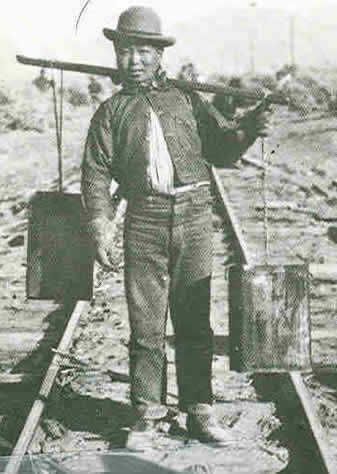
(Image Courtesy of Northeastern Nevada Historical Society and Museum.)
Chinese labor during the 19th century was crucial to the success and construction of the country’s railroads, specifically in the western portion of the United States.
During the 1840s-1850s, China suffered from severe economic disparities, in other words defined by an unequal divide in income, wealth, resources, and opportunities. Due to these issues and the constant corruption among local governments and officials, high taxes, and natural disasters, which wreaked havoc on the region, many Chinese citizens began to question the financial cost of living in their homeland. As time went on and the British heavily occupied the nation during the Opium Wars, much land in the province was destroyed, leading many into financial ruin. Certain sources describe the conditions and devastation as “Whether they were peasants, experienced miners, merchants, or day laborers, the Guangdong immigrants sought a life in America free from the turmoil of their native land. Throughout the 1850s and 1860s, their southern province was wrecked by poverty and war. Beginning in 1851, amid widespread social unrest and worsening famine, the Taiping Rebellion, the world’s bloodiest conflict, had, by 1864, claimed the lives of between twenty and thirty million people.”
As China experienced these problems and many from the region struggled to survive, Chinese citizens began to flee to the United States seeking better economic opportunities. While many who emigrated to the United States worked as miners, this profession, over time, became oversaturated, leading others to the Pacific Railroad in California.
The greatest influx of Chinese immigrants to the United States came from Guangdong Province (90%) in the Pearl River Delta region of southeastern China. It was home to predominantly farming and agricultural communities, who relied heavily on rice, sweet potatoes, and peanuts to survive.
In 1862, during the early stages of the American Civil War (1861-1865), the Central Pacific Railroad project was undertaken, aiming to construct railroad lines across the United States from the West. The early construction presented unique challenges of its own, including a shortage of labor forces and struggles to acquire sufficient supplies for building. Despite sentiments and extreme racist views against the Chinese in the United States, leaders of the Central Pacific Railroad understood that to complete construction, Chinese immigrants would need to be hired.
Looking statistically at the Chinese workers of the Central Pacific Railroad, the majority were male individuals between the ages of 25-30. Many sought better opportunities in the United States, hoping to earn fair wages and support their families back home.
While work on the railroad provided new economic opportunities for Chinese immigrants, they faced nothing short of extreme discrimination and racism from Americans and European immigrants, including the Irish. Many worked in extreme and undesirable locations, often working for lower wages than other immigrants (30 % lower wages). Organizations, including the Six Companies, which managed the process of bringing the Chinese to the United States, often garnished their wages, denied them access to housing, and profited heavily from their labor. Many businesses that engaged in the construction of the United States railroad organized their affairs as a pyramid scheme. In this way, those at the top profited and benefited heavily, while those at the bottom suffered the most.
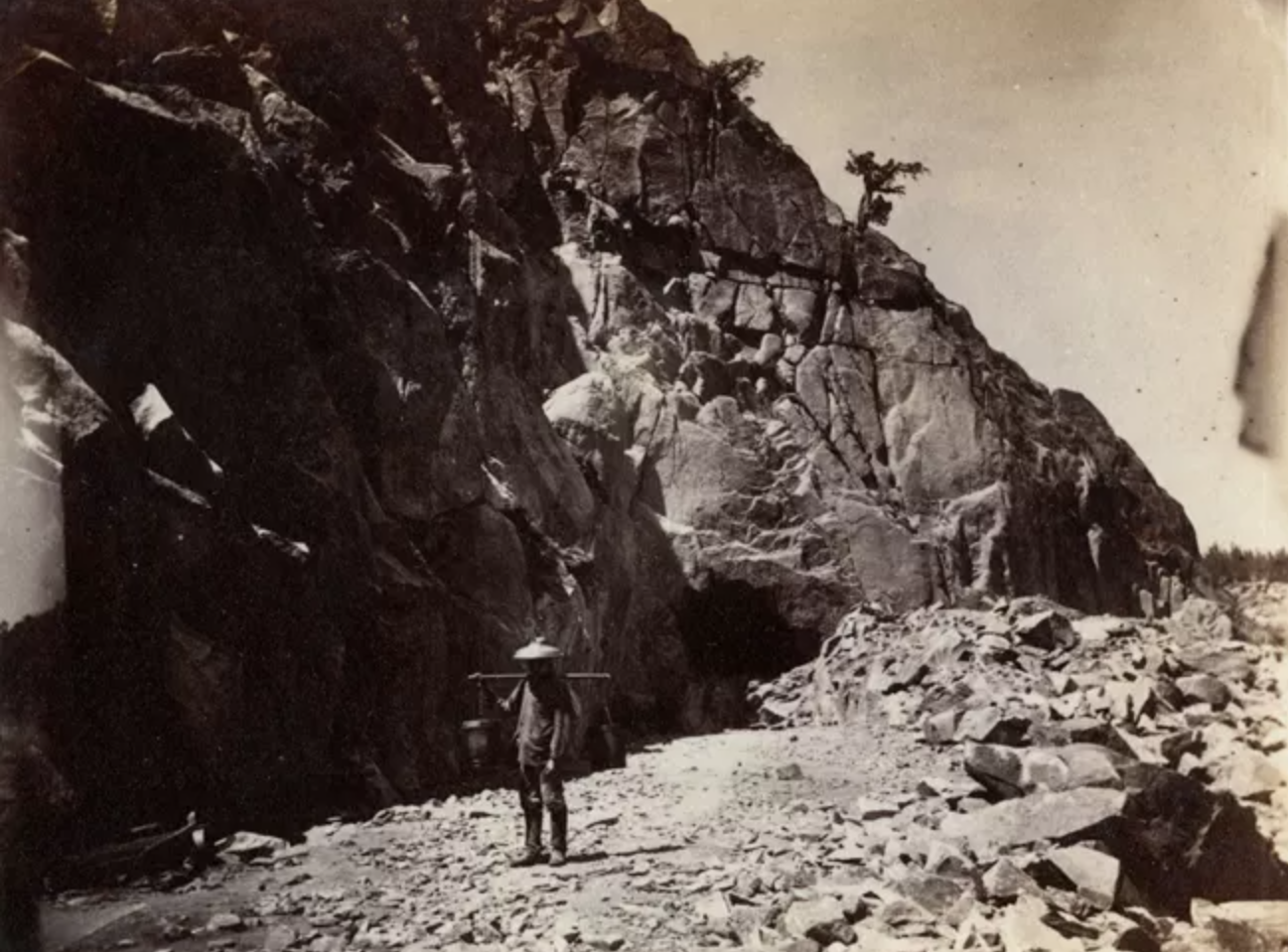
Top: Railway Laborers Boring Through a Mountain
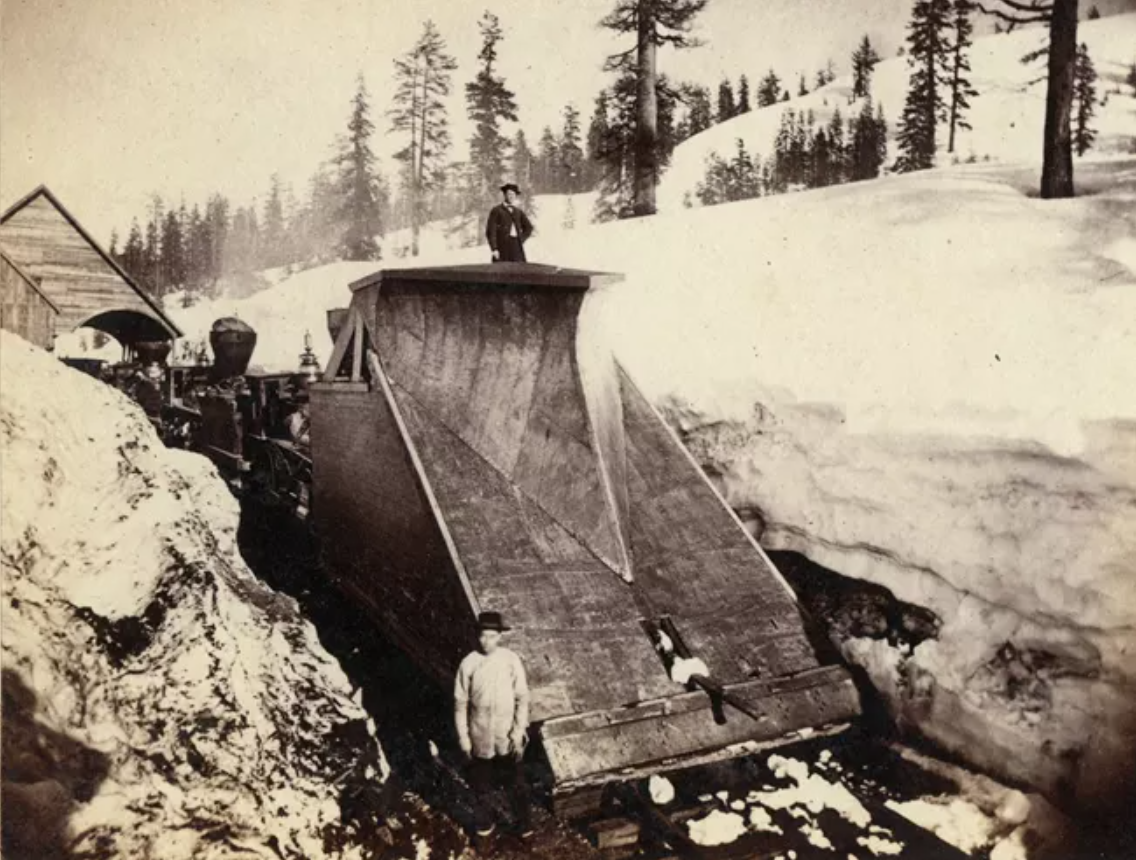
Bottom: Railway Workers Plowing Snow
(Images Courtesy of National Park Service)
On June 24th, 1867, Chinese workers on the Central Pacific Railroad began to strike, fighting for higher pay, reduced working hours on the railroad, and better working conditions. At the time, it was considered the “largest organized labor strike in the United States”. Despite this fight, leadership quickly responded against the Chinese, implementing harsh measures, including food supply cutoffs.
In 1870, nearly 10 years after the beginning of railroad construction, many Chinese immigrants began to leave the United States due to intense discrimination and anti-immigrant laws. Many workers, including those on the railroad, were often the target of violence due to racism and beliefs in their lack of working capabilities. Eventually, this discrimination began to boil over into specific laws, further dividing the Chinese in the United States. In 1875, the Page Law was passed, preventing Chinese women from immigrating to the United States, therefore, separating many families. After seven years, in 1882, the Chinese Exclusion Act was passed, preventing immigration for 10 years. In 1902, the law was made permanent in the United States, resulting in a significant decline in the number of Chinese laborers across various professions, including mining and railroad construction. While these laws were eliminated in 1943, during the later stages of World War II (1939-1945), the struggles endured by the Chinese left a permanent scar on their community, as hatred existed for generations to come.
Many still saw them as threats to the American way of life, including the Irish, who constantly blamed the Chinese for economic hardships. Years after construction was completed, the Chinese were left out or vaguely highlighted in promotions of the railroad, demonstrating the ongoing and generational xenophobic beliefs that existed throughout the United States. Many faced continual job discrimination, and the stories of those who worked on the railroad were next to nonexistent. According to the National Park Service, while newspapers and journalists did cover the construction of the Central Pacific Railroad, often Chinese workers were either left out of the narrative or their names were never documented.
While their stories have been diminished throughout time, there is no denying the role that the Chinese played in the Central Pacific Railroads. Despite facing extreme obstacles throughout their work, they persevered, leading the charge for the railroad’s establishment and settlement in many communities throughout the Western region of the United States.
Qiaopi Letters
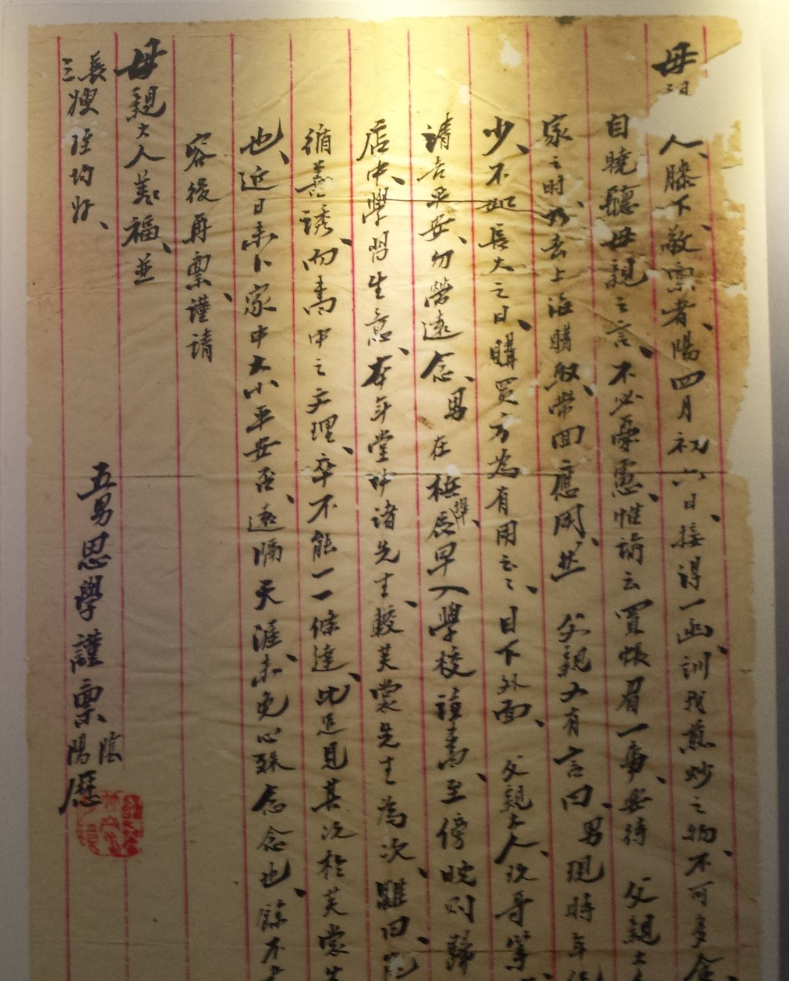
A Qiaopi Letter at the Shantou Qiaopi Cultural Relics Museum, Photograph Taken in 2014. Courtesy of Zhang Huimei.
Chinese emigration from their homeland was driven heavily by the poverty besetting much of Southern China, in places such as Guangdong. However, the outward flow of Chinese immigrants consisted mostly of young men – very similar to many European emigrants – who were primary income earners due to hard labor, such as agricultural work, being deemed a “masculine” task. These brave young men left on their own and left their families behind to minimize the expenditures in case their destinations proved fruitless. In the event that their destinations did prove as a place where a living could be earned, the emigrant men would settle down, find a job (such as in the American railroad industry), live as minimally as possible, and earn as much money as they could for their families.
Moving overseas is no easy task, however, as there were a number of limiting factors: internal migration, avoiding ongoing wars such as the Taiping Rebellion, acquiring enough money for transport overseas, and proceeding through the legislative limitations such as the Chinese Exclusion Act of 1882. To support their families in this endeavor, young men overseas would send Qiaopi to their families. Qiaopi (侨批) are letters of remittances sent by immigrant men to their families overseas, Qiao (侨) meaning “Immigrants” or “Emigrants,” and Pi (批) meaning “Letter.” These Qiaopi were important, not just for the sake of economics, but also for the sake of maintaining a connection to one’s family and homeland.
Letters such as these served as a means of expressing more than just financial situations, but also as a means of reaffirming familial connections, often including words of reassurance and encouragement. They were most often addressed to parents or grandparents – particularly fathers and grandfathers, as most women and children were either unable or only partially able to read and write Chinese, and due to men having a superior rank in the traditional Chinese family unit. Qiaopi also helped maintain cultural practices, as some amount of the remittances would usually be dedicated towards offerings to the traditional Chinese deities and for the worship of ancestors. The Qiaopi themselves would, eventually, become a part of coastal Chinese folk practices, with poems and songs wishing farewell to the emigrants looking for opportunity overseas.
A full boat of tears, a full boat of men;
One travels overseas just with a scrap of a wash-cloth.
Do not just send money back but also yourself;
Do not forget your parents and your wife in the bridal chamber.
A piece of qiaopi, two yuan of note.
Asking my wife:
to work hard and do not worry,
to nurture the children and warn them not to gamble,
to farm the field and feed the pigs.
I will return home to a reunion as soon as I make good money.
While work overseas was the priority for these young emigrant men, their thoughts were almost always of home and when they could reunite with their families. Whether that be through the families moving overseas or, as the second poem suggests, with the emigrants one day moving back to China with acquired wealth to improve their lives in their homeland. Just about half of the emigrants to the United States chose to remain, and the other half returned to China.
The Qiaopi letters have proven so impactful on Southern Chinese culture that the Guangdong Provincial Archives and the Fujian Provincial Archives containing many of these letters have been designated as heritage sites by UNESCO (https://www.unesco.org/en/memory-world/qiaopi-and-yinxin-correspondence-and-remittance-documents-overseas-chinese).
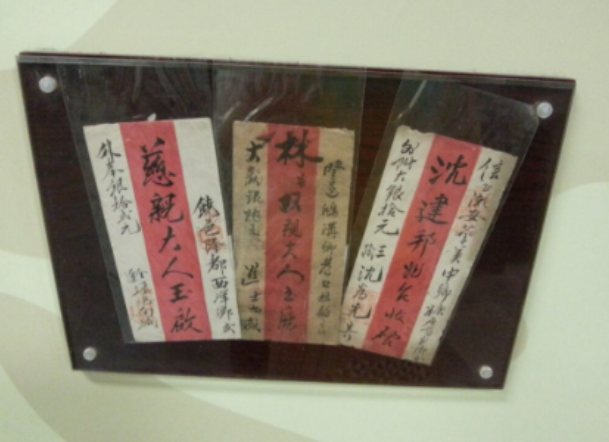
Exhibit in Shantou Qiaopi Cultural Relics Museum, photograph taken in 2014. Courtesy of Zhang Huimei.
Introduction to the Activity
Put yourself in the shoes of a Chinese immigrant to the United States. What would you write to your family, what would you talk about? Would you be a railroad worker, and would you join the strike with your fellow laborers? The activity below can help you organize whatever thoughts you may have, and introduce you to a few of the most important symbols in Traditional Chinese.
YouTube Video
Discussion Questions
Write A Qiaopi Activity
A Guide to Traditional Chinese
Lesson Plan
Sources
Carson, Scott Alan. “Chinese Sojourn Labor and the American Transcontinental Railroad.” Journal of Institutional and Theoretical Economics (JITE) / Zeitschrift Für Die Gesamte Staatswissenschaft 161, no. 1 (2005): 80–102. http://www.jstor.org/stable/40752497
Chen, Zhongping. “Chinese Labor Contractors and Laborers of the Canadian Pacific Railway, 1880-1885.” The Pacific Northwest Quarterly 110, no. 1 (2018): 18–34. https://www.jstor.org/stable/26836067.
Dearinger, Ryan. “Chinese Immigrants, the Landscape of Progress, and the Work of Building and Celebrating the Transcontinental Railroad.” California History 96, no. 2 (2019): 66–98. https://www.jstor.org/stable/26850805.
Kuei, Tzu Yen. “Chinese Workers And The First Transcontinental Railroad of the United States of America.” PhD diss. Saint John’s University, 1976.
Shu, Yuan. “Representing Chinese Railroad Workers in North America: Chinese Historiography and Literature, 1949-2015.” Stanford University Press/Digital Humanities Project. (2019), https://www.academia.edu/101199037/Representing_Chinese_Railroad_Workers_in_North_America_Chinese_Historiography_and_Literature_1949_2015.
Chen, Shuhua. 2024. “De-Labelling the ‘Memory of the World’: A Cosmopolitan Perspective on Qiaopi Remittance Letters.” Anthropological Forum 34 (1): 1–18. https://doi.org/10.1080/00664677.2024.2315488.
Hayes, Jack. 2024. “Chinese Migrations in the Mid-Late 19th Century | Asia Pacific Curriculum.” Asiapacificcurriculum.ca. 2024. https://asiapacificcurriculum.ca/learning-module/chinese-migrations-mid-late-19th-century.
Hooper, Kate. 2015. “Chinese Immigrants in the United States.” Migrationpolicy.org. January 27, 2015. https://www.migrationpolicy.org/article/chinese-immigrants-united-states-2013.
Huimei, Zhang. 2024. “Qiaopi: Remittance Letters from Chinese Migrants – Culturepaedia: One-Stop Repository on Singapore Chinese Culture.” Culturepaedia: One-Stop Repository on Singapore Chinese Culture. March 19, 2024. https://culturepaedia.singaporeccc.org.sg/communities/qiaopi-remittance-letters-from-chinese-migrants/.
“International Memory of the World Register Qiaopi and Yinxin: Correspondence and Remittance Documents from Overseas Chinese (China) 2012-57.” n.d. https://media.unesco.org/sites/default/files/webform/mow001/china_qiaopi_and_yinxin.pdf.
Rawski, Evelyn. 1979. Education and Popular Literacy in Ch’ing China. Ann Arbor: University of Michigan Press.
U.S. Department of Labor. n.d. “Hall of Honor Inductee: The Chinese Railroad Workers.” DOL. https://www.dol.gov/general/aboutdol/hallofhonor/2014_railroad.